AC Installation and Replacement for Older Homes
Request an estimate from a local provider
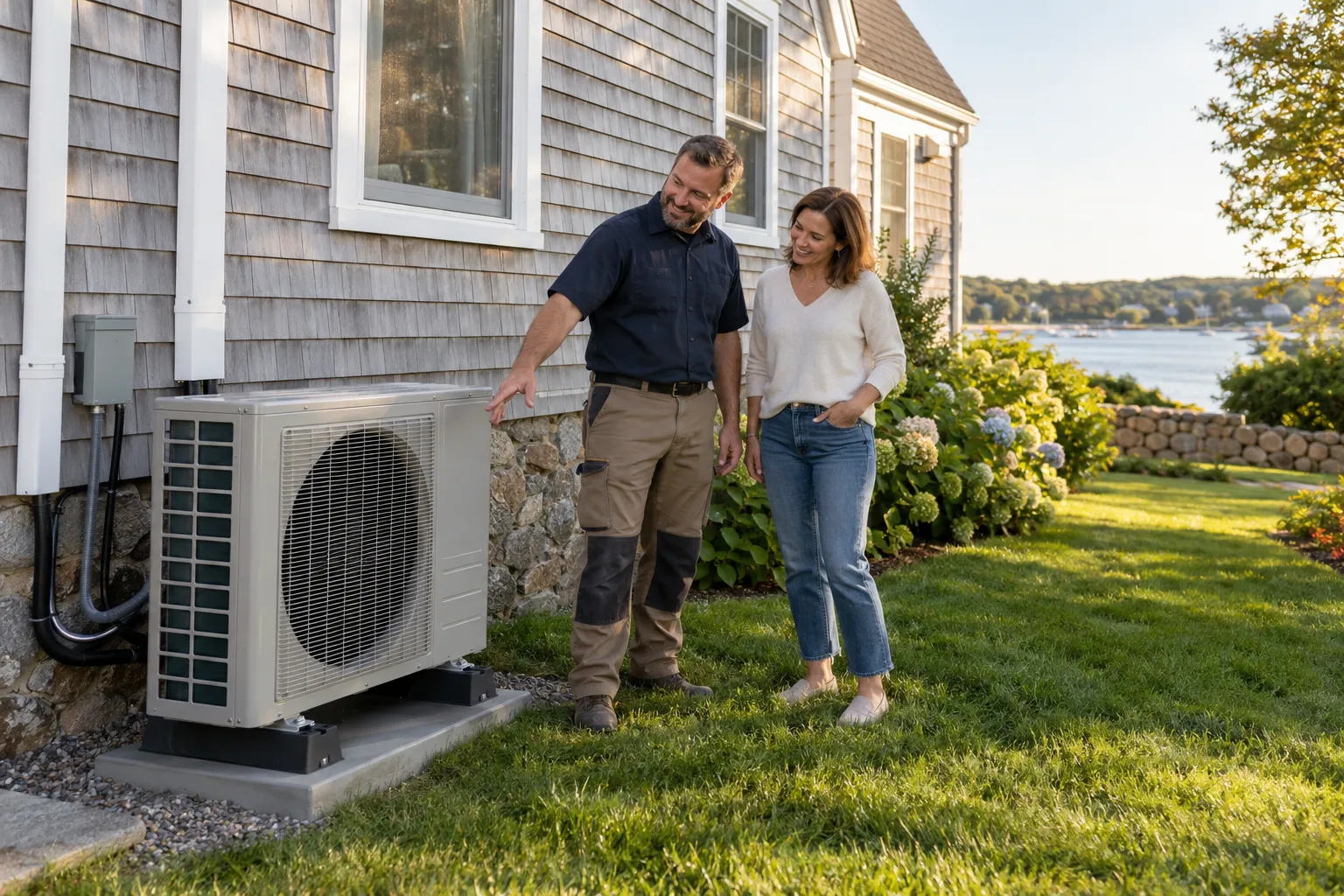
A lot of people think a new air conditioner is a simple swap. In practice, older houses add steps. Ductwork may be patched or undersized. Basements may be damp. Electrical panels may be small. A good replacement plan starts with those details.
Exceptiondone Heating & Air is a referral service. We do not install anything ourselves. We explain how replacement works, clear up common myths, and connect homeowners in Taunton and the Taunton area with independent local providers in our network. The provider visits, measures your home, and gives you a written quote. You decide if and when to go ahead, with no obligation to hire anyone.
Is It Time for a New AC? Myth Versus Reality
A lot of people think an AC should be repaired until it quits for good. In practice, there is a tipping point. The unit still runs, but each fix buys less time than the last one. At that stage, repair bills start to add up to the price of a better system.
If your system just failed in a heat wave, emergency AC repair may get you through the week. Replacement can then be planned calmly instead of under pressure.
Signs Your AC May Need Replacing
One warning sign alone rarely tells the whole story. Several together usually do.
- The system is roughly 12 to 15 years old, or older.
- Repair bills keep showing up, season after season.
- Some rooms are hot while others feel cold or clammy.
- Cooling bills climb even though your habits did not change.
- The unit runs for long stretches but never quite catches up.
- You hear grinding or banging, or you see ice on the lines.
Ask a provider about the refrigerant, too. Older systems use types that are being phased out, which can make repairs harder to source.
How a Failing System Unfolds Over Time
Myth: an AC dies suddenly on the hottest day. Reality: it usually sends warnings for a season or two. Run times get longer. Airflow gets weaker. Small repairs pile up.
Then the final failure lands on a peak day, right when every household wants cooling and providers are busiest. Small now, big later. Planning in spring or fall gives you more choices, calmer scheduling and time to compare quotes.
Old House, New Surprises
Older homes in cold, snowy regions often have stone or block foundations, full basements and tight upper floors, as in many Cape Cod style houses. Those features shape how cooling should be done.
Providers often look for things like these:
- Ducts that were patched, shortened or never built for cooling.
- A basement that stays damp and needs good drainage for the condensate line.
- An electrical panel with little room for a new circuit.
- Walls and ceilings where a duct simply will not fit.
- Past repairs that hide behind finished surfaces.
None of this means your house is a problem. It means the quote should be based on a real look, not a guess.
Types of Cooling Systems
There is no single right answer. These are the common options:
- Central split system: an outdoor unit paired with an indoor coil and your existing ducts.
- Heat pump: cools in summer and can also supply heat, which fits many heating and cooling plans.
- Ductless mini-split: no ducts needed. Often a fit for additions, attics and multi-family layouts.
- Small-duct high-velocity system: thin flexible tubes that can fit inside old walls.
A provider can tell you which one suits your floor plan and budget.
Why Proper Sizing Matters
Myth: bigger is better. Reality: an oversized unit cools the air quickly, shuts off, then starts again. That constant cycling wears parts and leaves the air sticky, which can make a basement feel damp.
A careful provider runs a load calculation. It looks at insulation, windows, sun exposure, ceiling height and how many people live in the home. Square footage alone is not enough.
What an AC Installation Includes
The scope varies, but most jobs cover these steps:
- Removing and disposing of the old equipment.
- Setting the new outdoor unit on a level pad.
- Connecting refrigerant lines, power and the condensate drain.
- Fitting or adjusting the indoor coil and any duct connections.
- Installing a thermostat and testing the whole system.
- Handling permits where your area requires them.
Ask for these items in writing so nothing is a surprise later.
Matching the System
The outdoor unit, indoor coil and air handler or furnace should work as a matched set. Mixed parts can lower performance and cause early wear.
If your furnace is also aging, some homeowners search furnace replacement near me and plan both jobs together. That can simplify ductwork and scheduling. Your provider can explain what makes sense for your home.
Efficiency in Plain Terms
Myth: the highest efficiency number always pays off. Reality: a higher rating uses less electricity, but where winters are long and cooling seasons are short, savings build up slowly.
Look at the rating, the climate and how often you cool. Then ask the provider to compare two or three options side by side.
Questions to Ask the Provider
- Will you do a load calculation, and can I see the results?
- What will you check in my ducts, panel and drain?
- Is the quote written, with equipment models listed?
- What does the warranty from the manufacturer cover, and who handles claims?
- Who pulls permits, and who removes the old unit?
- When could the work realistically start?
Good providers welcome these questions.
What's Included
Site Assessment
A provider looks at your ducts, panel, drainage and layout before quoting, so older-home surprises show up early.
Load Sizing
Equipment is matched to your home's real cooling needs, not just its square footage.
Old Unit Removal
The worn-out equipment is taken out and disposed of as part of the job.
Testing and Setup
The system is started, checked and explained so you know how it runs.
Typical Replacement Cost Ranges
Prices vary by home, equipment and region. These are typical U.S. ranges, not quotes. Older houses may need extra work, so always get a written quote before agreeing to anything.
| Item | Typical range | Notes |
|---|---|---|
| Central AC replacement | $5,000 – $12,000 | Depends on size and efficiency |
| Heat pump system | $6,000 – $16,000 | Provides cooling and heating |
| Ductless mini-split (single zone) | $3,000 – $7,000 | Good where ducts are not possible |
| Ductwork repair or modification | $500 – $5,000 | Common in older homes |
| Electrical panel or circuit upgrade | $500 – $4,000 | Needed if capacity is low |
| Thermostat upgrade | $150 – $600 | Smart models cost more |
How It Works
Tell Us Your Situation
Share your address area, your current system and what is going wrong. Request an estimate or ask for a callback.
Get Matched Locally
Exceptiondone Heating & Air connects you with an independent provider serving your part of the Taunton area.
Review a Written Quote
The provider inspects your home and explains equipment options and pricing in writing.
Choose Your Timing
You decide whether to proceed, and the provider schedules the installation with you.
Why Call Exceptiondone Heating & Air
Plain Talk, Not Pressure
We explain options in simple words and never push you to decide before you are ready.
Older-Home Focus
Guidance is shaped around aging ducts, tight spaces and past repairs.
Independent Providers
You are matched with local providers in our network who do the actual work.
No Obligation
Request an estimate and compare it. You choose whether to move forward.
Other Services
Need ac installation and replacement in Taunton?
Tell us what your system is doing and we will point you to a local provider in our network. Send a request or ask for a callback. There is no obligation.
No obligationAC Installation and Replacement FAQ
How long does an air conditioner last?
Most central systems last about 12 to 15 years, depending on use and upkeep. Coastal air and heavy use can shorten that, so age is only one clue.
Is it better to repair or replace an old AC?
It depends on age, repair cost and how often it breaks. If the system is over 12 years old and repairs keep coming, a provider may suggest replacing it. Ask for both quotes in writing.
Can an older house with no ductwork get central air?
Often yes. Ductless mini-splits and small-duct systems are made for homes without ducts. A provider can look at your walls and layout and tell you which option fits.
Get in touch
Tell us what your system is doing and we will point you to a local provider in our network. Send a request or ask for a callback. There is no obligation.
No obligation